


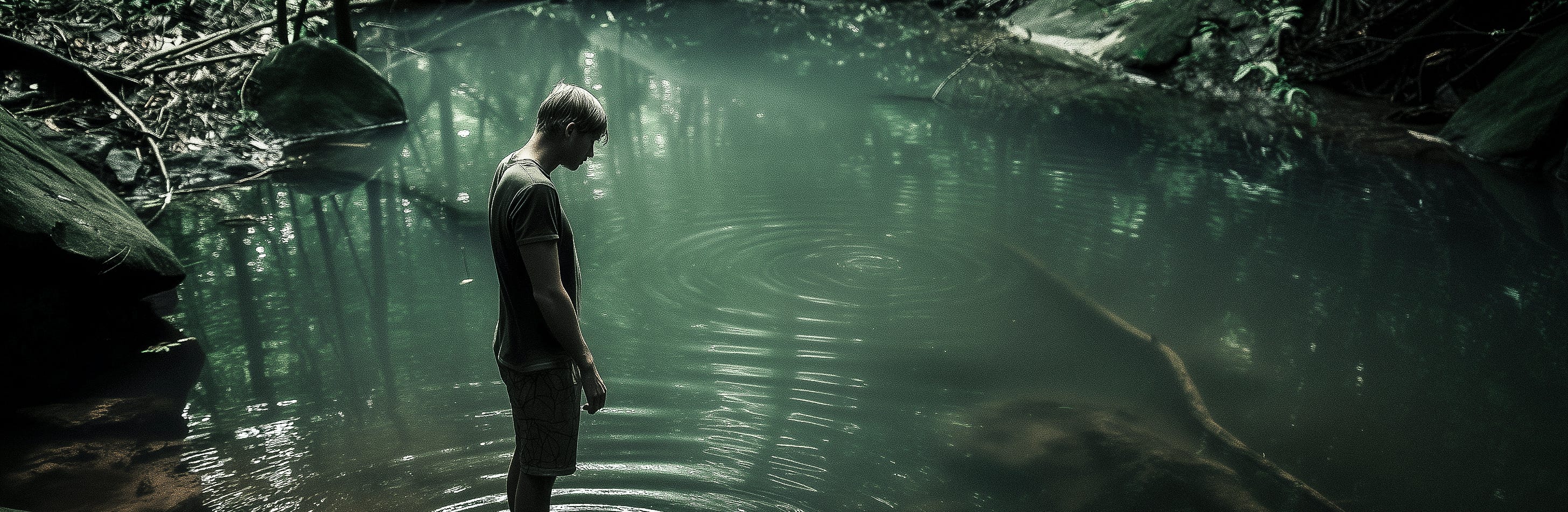
I arrived in Peru weighing about 140 pounds. I’m nearly six feet tall. My body told the story before I ever did. I was depleted, worn thin, and carrying more than I could have described at the time. Whatever I thought I was coming for, I wasn’t arriving from a place of strength.
September 11, 2019
A week or two earlier, Cade and I had talked about Peru. Now I was here.
The center itself was calm and intentional. The main area, where the dining space and the maloca were located, felt thoughtful and cared for. There were paths, places to sit, a sense of order.
Inside the dining space were comfortable couches and a small library. Outside, several hammocks overlooked a lake just down a small hill, and a small bridge led across to a covered dock on the other side. It was all quaint, lovely, and quiet.
But once we passed the maloca, that stopped.
The staff walked me farther out, showing me to my accommodation located beyond the areas that had been cleared or maintained. The path narrowed. The ground changed. The jungle didn’t ease in gradually. It began all at once.
This was different from Nicaragua. I was used to the jungle there. This felt like something else entirely. Like I’d gone from the shallow end straight into the deep.
My tambo sat at the edge of the property. A small, screened-in hut on stilts, surrounded by trees. When the guide turned and walked back toward the main area, the distance felt enormous.
I wasn’t just in Peru. I was alone in Peru.
I was hungry in a way that went deeper than food. A kind of cellular hunger I’d been carrying for months. And I missed Cade immediately. The jungle wasn’t quiet. It was a wall of sound, layered and constant, and I didn’t feel part of it yet.
That afternoon, I met the man who ran the center. We sat and talked, and the conversation moved easily toward why I was there.
“Trauma shapes how we see and treat ourselves,” he said. “It’s not our fault what causes it, but we’re often left to deal with it, or heal it, without the tools to do it on our own.”
Something in my chest loosened. He was speaking directly to what I’d been living inside.
After Costa Rica, after the lights and the seizure and the noise, this felt grounding. He felt steady and safe. He named the unfairness of what I’d been living with, without making it my fault.
I walked away from that conversation believing I had finally found the right place. A place that understood what I needed.
I didn’t yet see what I was walking into.
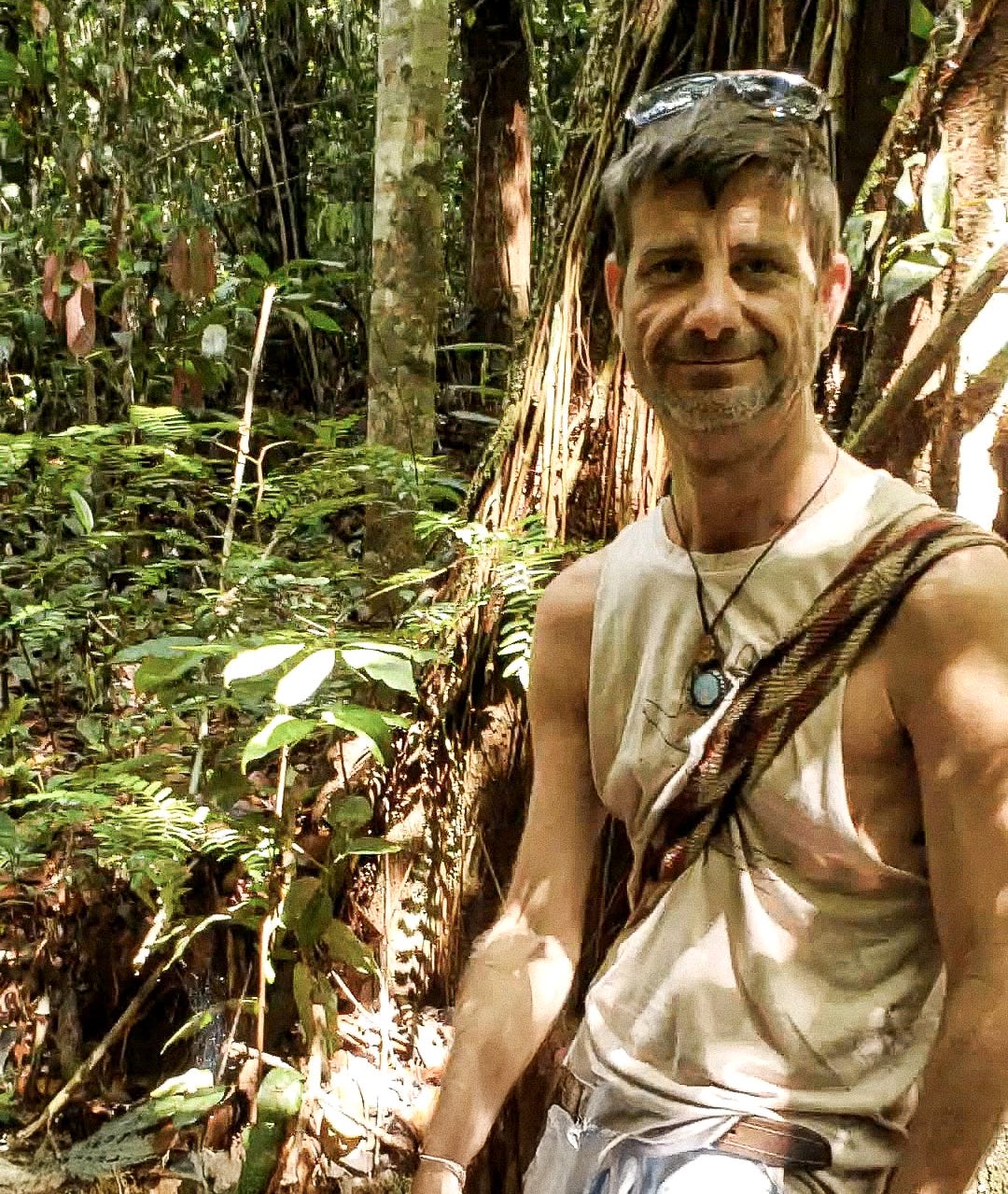
The ceremony was scheduled for later that evening.
As it got darker, the jungle grew louder. I went to the showers and got ready. I used only fragrance-free soap and shampoo, toothpaste without additives. I’d learned later how much that mattered, how certain scents could interfere with the experience.
Back in my tambo, I removed my watch and the ring Cade had given me just weeks earlier. Wearing it made me feel less alone, like he was there with me. Taking it off felt wrong. It also felt necessary. Like stepping into something that existed before we knew each other.
I’d learn later why removing jewelry mattered. How wearing certain things could become physically uncomfortable, even painful.
Once, I’d tried to keep a crystal wrapped in string around my neck and had to remove it when it started to feel like fire against my skin. After that, I learned to keep it close instead of wearing it.
As I stood there in the dim light, the memory of the Costa Rica floor came rushing back. The warm dampness. The shame. The man handing me the pants.
I looked at the roll of toilet paper sitting on the shelf. I wasn’t going to let it happen again. I tore off a long strip of paper, folded it into a thick pad, and shoved it into my pocket. I hesitated. The pocket felt too far away. If I lost control, I wouldn’t have time to reach for it.
I took the paper out of my pocket and stuffed it directly into my underwear. It was ridiculous and uncomfortable.
It was a diaper made of Charmin. But as I walked from my distant Tambo toward the maloca, that wad of paper was the only control I had left.
The maloca was lit only by a few candles. This was what I had read and heard about, and the opposite of Costa Rica.
One by one, each of us stood, walked up to the shaman, and kneeled before him. He was older, weathered. A lifetime of experience and generations of ancestors before him showed on his face and in his gentle mannerisms.
As I sat there waiting my turn, I realized I hadn’t prepared an intention, which I’d been told was important. I didn’t really understand what that meant yet. And even if I had, I wouldn’t have known where to begin. Whatever had brought me there felt too large to name, let alone shape into something tidy.
When I was presented with the cup, the smell hit me. A reminder of the nausea I’d felt shortly after drinking the first time. That sensory memory made it even harder to keep it down this time. But keeping it down was exactly what I needed to do. And I did.
I returned to my mat and waited. And waited. It seemed to take ages for her to arrive. I lay there, feeling the paper in my pants, listening to the shaman sing.
And then, without a knock, she kicked the door in.
The intensity was immediate and overwhelming. There was no slow build, no gentle introduction. Suddenly, there were hundreds of images firing at me. It was a machine-gun assault of visuals, flashing so fast I couldn’t retain a single one.
I couldn’t breathe. I couldn’t think.
My body went into revolt. I was freezing cold, then burning hot. I thrashed from side to side on the mat, trying to find a position that didn’t feel like dying.
“Stop,” I said. “I want this to stop. I need this to stop!”
I begged the medicine. I bargained with her. “I promise I will come back,” I told the darkness. “I promise. Just please, leave me with one good thing. One image. One moment I can hold onto, so I know this isn’t just happening to me.”
It felt like everything I’d ever lived through was being pulled apart at once. Not gently. Not in order. Just exposed and sorted at a speed I couldn’t follow. Like my entire life was being emptied out and filed into a system I didn’t yet understand. There was too much. It was all happening too fast. I wasn’t asking for answers. I just needed proof that something healing was actually taking place.
I was negotiating for my sanity. I didn’t purge physically, I kept checking my pants, terrified that the armor I’d stuffed down there would fail me, but my mind was being emptied out.
Eventually, the machine-gun fire of images slowed. The chaos began to recede, leaving me lying on the mat, exhausted, sweating, and raw. I was still in it, the medicine hummed in my blood, but the storm had passed.
That’s when the director appeared.
He moved through the dark maloca, checking on us one by one. He came to my mat and crouched down to ask how I felt.
By the small light he carried, maybe a candle, maybe a tiny flashlight cupped in his hand, his face stood out against the dark, which made what I noticed feel even sharper.
In that light, the “wise guide” from the afternoon was gone. The man in front of me was vibrating. He seemed speedy. Electric. Like someone who had been up all night on something far stronger than caffeine.
He was smoking something I didn’t recognize. The smoke drifted over me, sharp and unfamiliar, mixing with the mapacho and the damp jungle air.
My background involves a lot of rooms with a lot of people on a lot of substances.
I know what “high” looks like. I know what “manic” feels like.
Watching him twitch and pace in the shadows, that familiar alarm bell began to ring. It bothered me.
“You might be sensitive to the medicine,” he said, his energy jittery and fast. He suggested I take less next time.
“Dialing it back is a good idea,” I managed to say.
But as I lay there, watching his silhouette buzz with that frantic energy, a question formed in the back of my mind. Was this him? Was I seeing the “real” him, stripped of his daytime mask? Or was the medicine doing exactly what I had asked her to do?
I had come here to heal my own trauma, my own history with addiction and chaos. Perhaps she wasn’t showing me what I feared. Perhaps she was holding up a mirror. She was showing me the energy I had run away from.
She was showing me ME!
After the ceremony ended, I made my way back to my tambo alone. The path was frightening in the dark, even with my small flashlight.
I didn’t sleep that night.
I curled up in the hammock inside my tambo because it felt like the safest place, the hardest for anything to reach me. I lay there, maybe dozing in and out a bit, until the sun came up.
Then I finally slept until I heard the bell ring to indicate breakfast was being served.
-R. Michael
If you have thoughts or questions, I’d really love to hear from you in the comments. I read every one.
Want to keep going? The Peru Chronicles.
Quick note for context, since this topic can bring out a lot of strong opinions.
Everything I’m sharing here is just my personal experience, from inside my own body and nervous system. I’m not speaking for the medicine, for a tradition, or for anyone else’s ceremony. I also know firsthand that people can sit in the exact same setting and walk away with completely different experiences.
My goal with this series isn’t to make a claim or start a debate. It’s to tell the truth about what happened to me, and what it changed for me, as honestly as I can.